
Fatbergs make for an unpleasant topic for debate. They are vast buildups of grease, oils, wipes, and other hygiene products that clog and damage the sewer systems, causing a profusion of trouble for those in charge of repairing and unblocking the system.
The Public Works Commissioner in Macomb County was responsible for removing a massive fatberg in one of the county’s sewer system in 2018. The removal and repair process cost them over $50,000, in addition to the inconvenience caused to the residents.
There have been countless cases of fatbergs all across Australia, England, Canada, and the United States. And one thing was common in all the removed fatbergs—wipes.
Both flushable and non-flushable wipes were found to be the main culprit in Macomb County’s fatberg too. Considering their prevalence, the Public Works Commissioner filed a suit in the county’s Circuit Court this year in May. Her lawsuit claimed that most wipes that aren’t flushable aren’t labeled “non-flushable.” They take longer to disperse in water or never disperse, which makes them harmful for the septic systems. While announcing the lawsuit, she urged the companies to change their packaging and marketing tactics for wipes.
The defendants were some of the manufacturing giants of flushable and non-flushable wipes, including The Proctor & Gamble Company, S.C. Johnson & Son, Inc.Rockline Industries, Inc., Dude Products, Inc., Kimberly-Clark Corporation, Yezis LLC, Nice-Pak Products, Nehemiah Manufacturing Company LLC, and C.B. Fleet Company, Inc.
However, to date, only Proctor & Gamble and Kimberly-Clark have responded to the lawsuit—both denying the allegations.
Non-Flushable and Non-Labeled Wipes Aren’t Alone to Blame.
Two labs studied the disintegration of flushable, non-flushable, and non-labeled wipes.
The Integrative Biosciences Center of the Wayne State University studied a sample of the fatberg collected from Macomb County. The researchers soaked flushable wipes for two full days (48 hours), and they found that the majority of the wipes didn’t break down enough to be considered septic-safe.
At the Ryerson Flushability Lab of the Ryerson University, similar results were found for a sample of 101 flushable and non-flushable wipes. While some of the wipes labeled “flushable” broke down more than the others, they still didn’t meet the International Water Services Flushability Group’s standards.
Unsuccessful Bills
Since the coronavirus emerged, the number of wipes found in the sewer systems has surged by a whopping 400 percent. Numerous bills have been introduced by the Senate and the House members, claiming to hold companies accountable for the labeling, packaging, and marketing of wipes, but most of them remain stuck to date.
In August 2018, a House Bill 6279 was proposed to restrict wipes’ sales without a label. No action was taken back then. The bill was reintroduced this year in May (House Bill 5796), but it still seems stuck in the committee.
Other bills that were introduced for appropriate labeling of flushable and non-flushable wipes, but never made it to the approval and enactment, are:
- House Bill 2842, Minnesota
- Senate Bill 5307A, New York
What Are We Doing to Make a Difference?
Over the past two decades, the rise of baby and feminine wipes has given birth to several challenges for businesses, homeowners, and waste treatment facilities across the United States. They lead to clogged pumps, causing sewer pipes to back up wastewater into homes and commercial facilities.
Not to mention, the sheer embarrassment when the unflushed wipes resurface in the toilet bowl, to reveal your privy secrets!
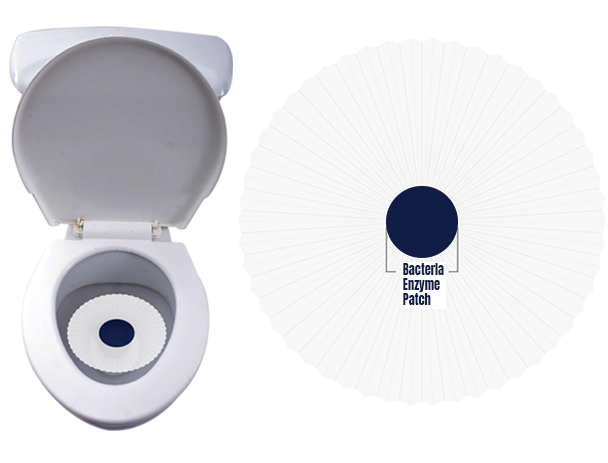
Using Trackless Toilet Flush Sheets (TFS) is a two-pronged approach that resolves both these problems for you.
First and foremost, it saves you from the crippling shame of seeing used sanitary wipes floating in the toilet bowl. It’s normal for business to get messy in there, and you don’t want to clean the tracks with a toilet brush; it’s filthy! But Trackless Toilet Flush Sheets ensure that there are no tracks in the bowl that can be tracked to you.
It’s a cost-effective, eco-friendly solution for the disintegration of wipes and waste with septic-safe bacteria-eating enzymes. This means you won’t have to worry about flushing or cleaning the tracks once you’re done using the toilet because Trackless Toilet Flush Sheets wrap up the job and clean the toilet bowl in 22 minutes.
We are conducting extensive research in the UK, Japan, the US, and Russia to develop enzymes that can dissolve cellulose-based flushable and non-flushable wipes quickly enough for the smooth functioning of the sewer systems. You can also play your part by investing in our research projects.
To learn how our septic tank solution products; Trackless Toilet Flush Sheets work and how they breakdown flushed paper and waste without harmful chemicals, read here.
Place an order today for a next day delivery or contact us for more information about American standard toilet sheets!